
Bootloader could not connect error
Bootloader could not connect error.
If you receive a “Bootloader could not connect” error when updating your device, follow the steps below.
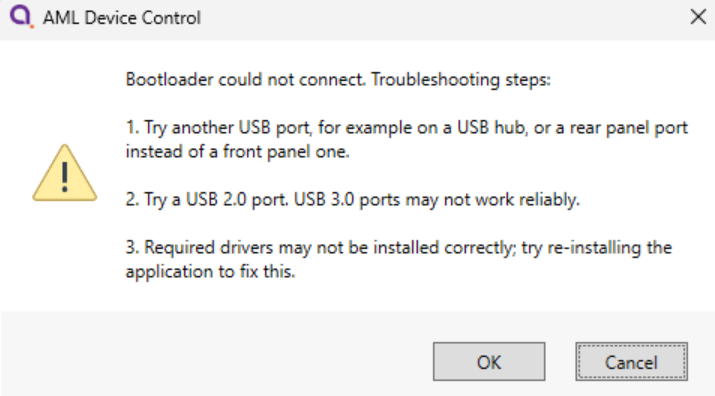
1. Make sure the device is connected to a USB 2.0 port. There have been some unresolved issues with reliability when updating via a USB 3.0 port, particularly with certain driver versions.
2. Ensure your device has the correct drivers installed, this can be done by going onto device manager whilst the error message has appeared.
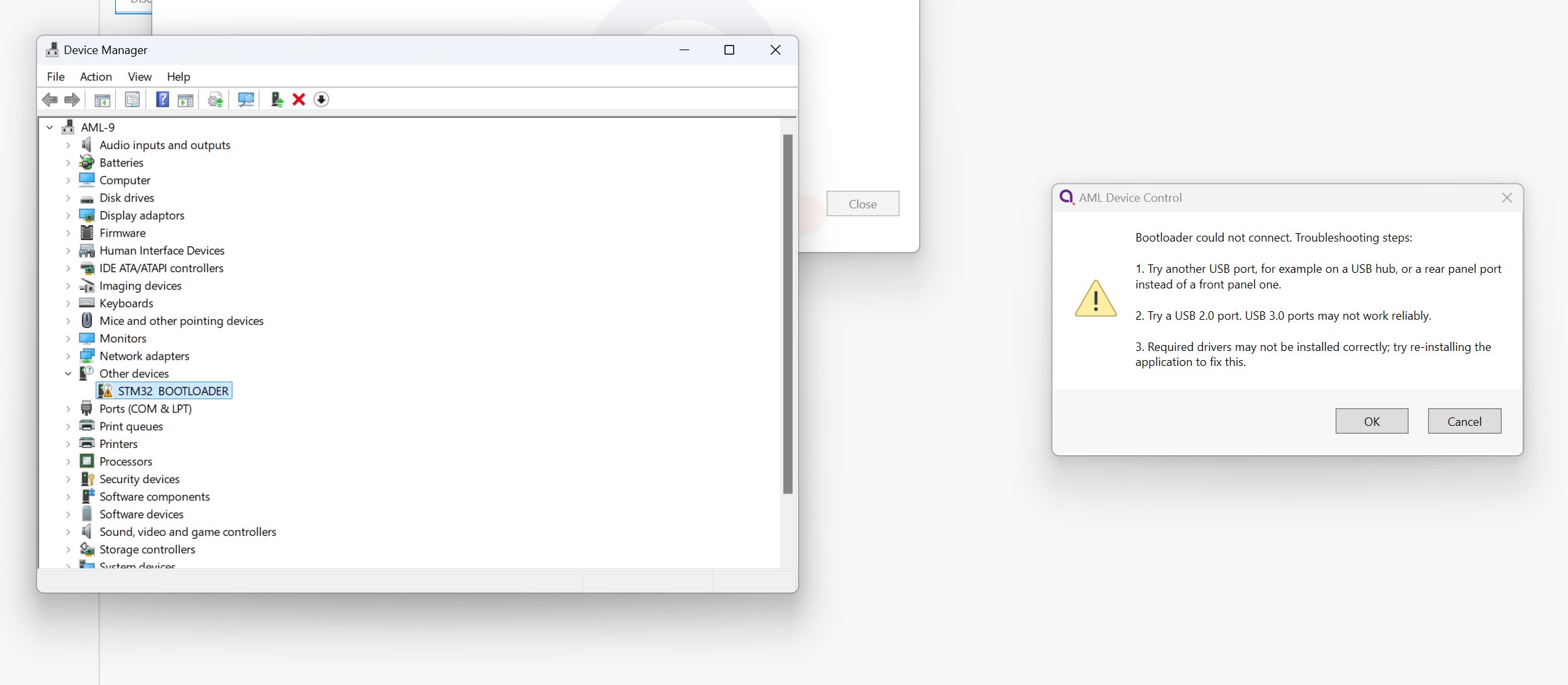
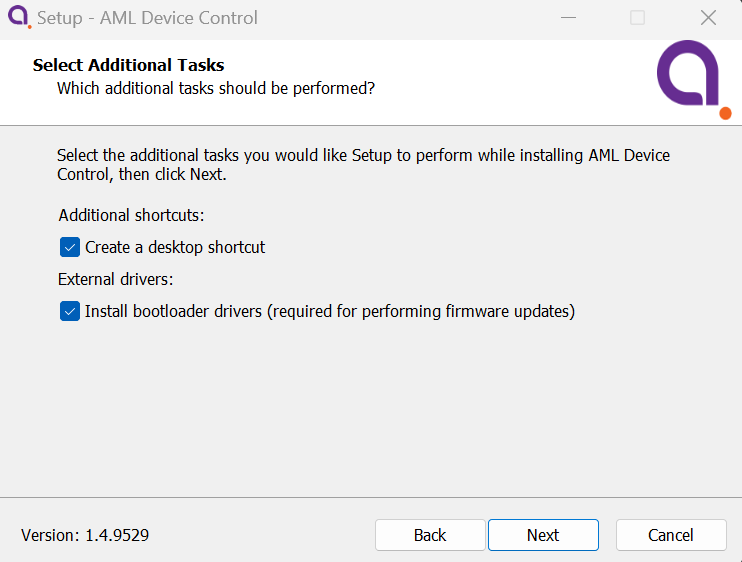
If the device appears like below, Reinstall the Device Control software. This will also reinstall the drivers required to update the device. During installation, make sure the driver installation checkbox is selected. After reinstalling the software, retry the firmware update process. If this doesn't work, try manually setting the drivers. The instructions can be found in the 'Wrong Driver selected error' section.

WrongIf driverreinstalling selectedthe error.
software Ifand drivers does not resolve the issue, start the firmware update again and stop when you receive a “Wrong driver selected” error when updating your device, followreach the stepsfollowing below.message:
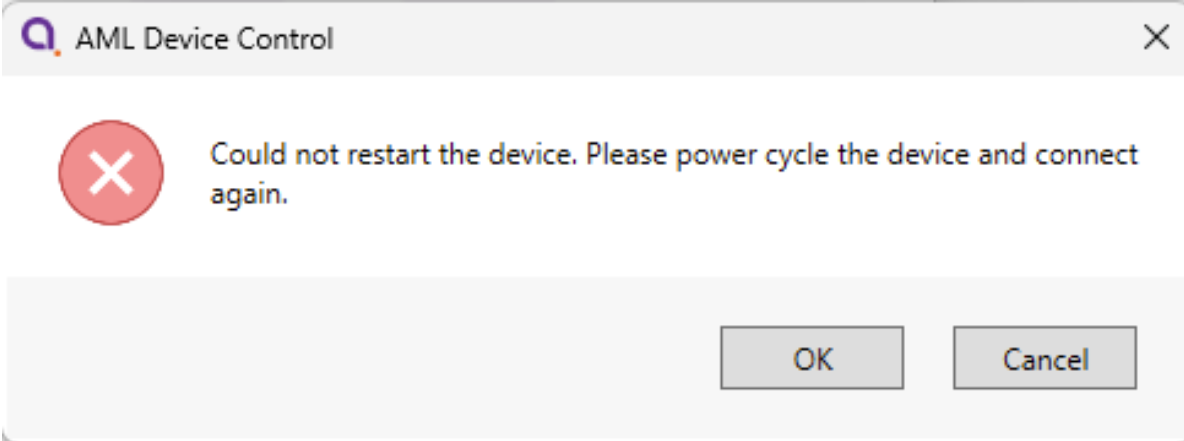
WhileThen check if windows is selecting the errorcorrect messagedrivers is displayed go to Windowsin device managermanager.
It should appear as a STM32 BOOTLOADER device.

If it doesn't appear with STM32 BOOTLOADER and findappears the device. It will be listed aswith STM Device in DFU Mode.
Right-click on the device > properties > update driver.
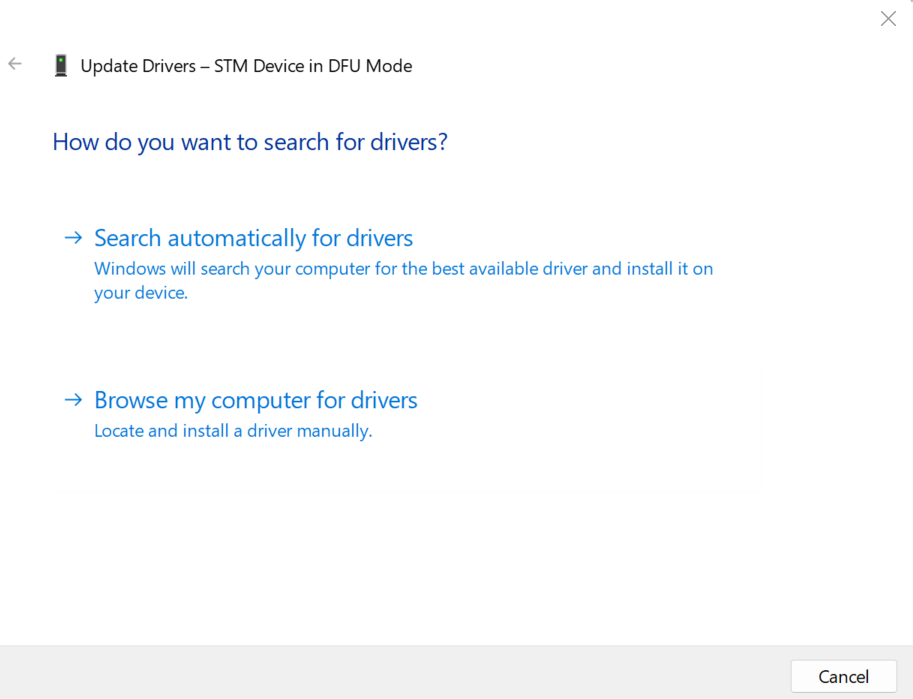
Select 'Browse my computer for drivers' > 'Let me pick from a list available drivers on my computer'. Select STM32 BOOTLOADER and click next. Restart your device and Device Control software and try to update again.
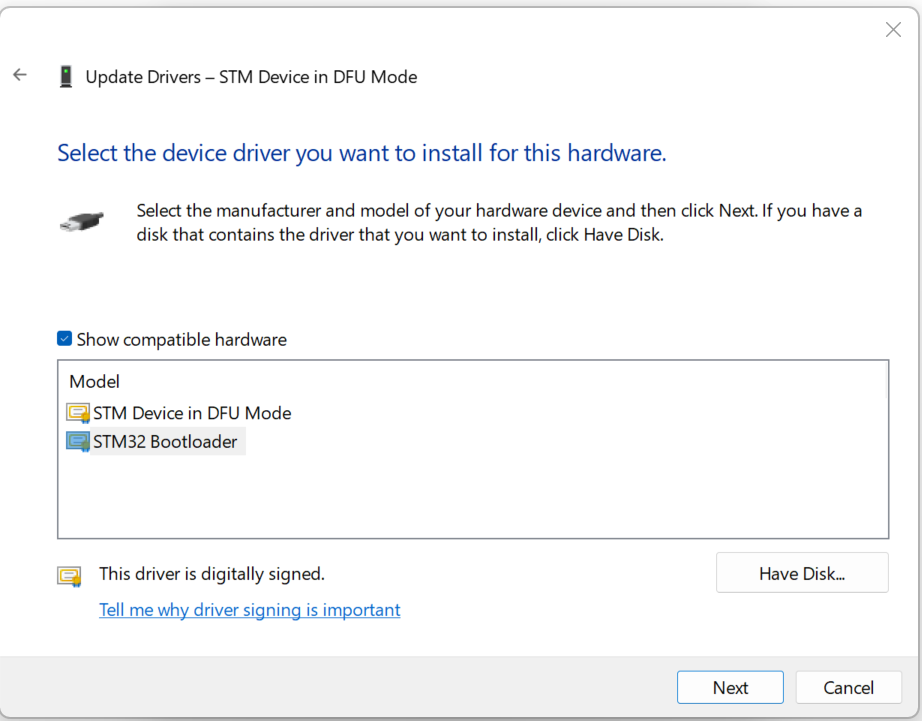
It should now appear as a STM32 BOOTLOADER device.
Restart your device and the Device control software and try updating the device again.